Exploration has always been a high-risk, capital-intensive process. Over the last decade, this challenge has intensified as demand for critical minerals grows alongside pressures from electrification, energy transition, and industrial resilience. While companies and governments now possess vast amounts of technical information, much of it remains disconnected, unstructured, and difficult to place into geographic context.
This gap between data ownership and data usability has quietly become one of the largest hidden drains on exploration efficiency.
The Real Issue: Too Much Data, Not Enough Structure
Most exploration organizations sit on decades of valuable material. This includes geological reports, geochemical assays, surface and subsurface mapping, historical drill logs, technical figures, and government datasets. Individually, each file contains insight. Together, they could reveal a far more complete understanding of a region’s geological potential.
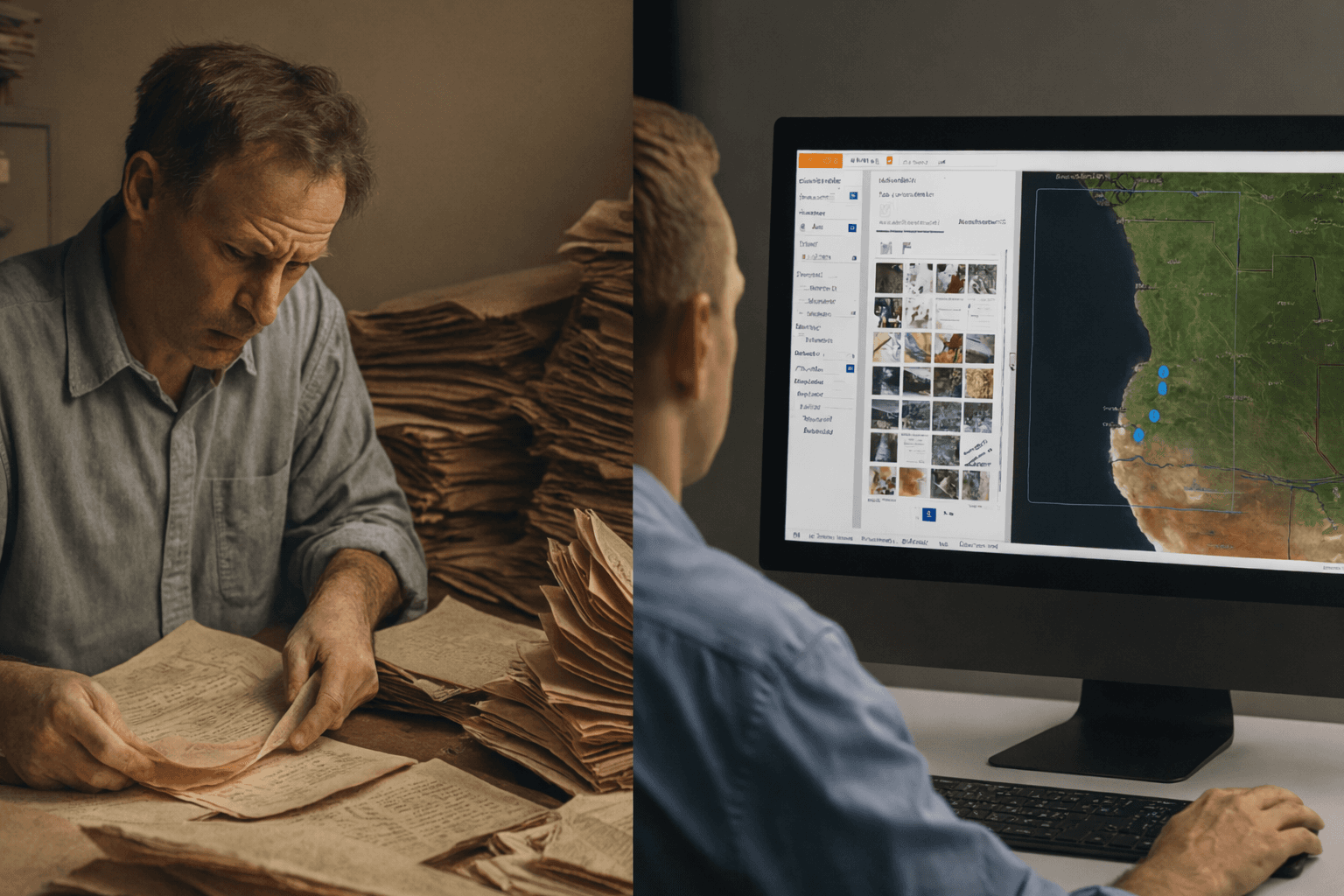
In practice, however, this rarely happens. Files are scattered across PDFs, spreadsheets, images, maps, and proprietary systems. Much of the information exists outside modern workflows, making it difficult to locate, compare, or reuse. As a result, teams often spend a disproportionate amount of time reconstructing past work instead of interpreting it.
When effort is consumed by searching and rebuilding rather than analyzing, exploration becomes slower, more expensive, and increasingly prone to missed opportunities.
Why Spatial Context Changes Everything
Exploration is not simply a data problem. It is a location problem.
Without accurate spatial context, even high-quality datasets remain difficult to integrate. Reports cannot be reliably compared. Historical results cannot be easily validated. Patterns that depend on geographic relationships remain hidden.
The industry does not suffer from a lack of data. It suffers from a lack of spatially aware data.
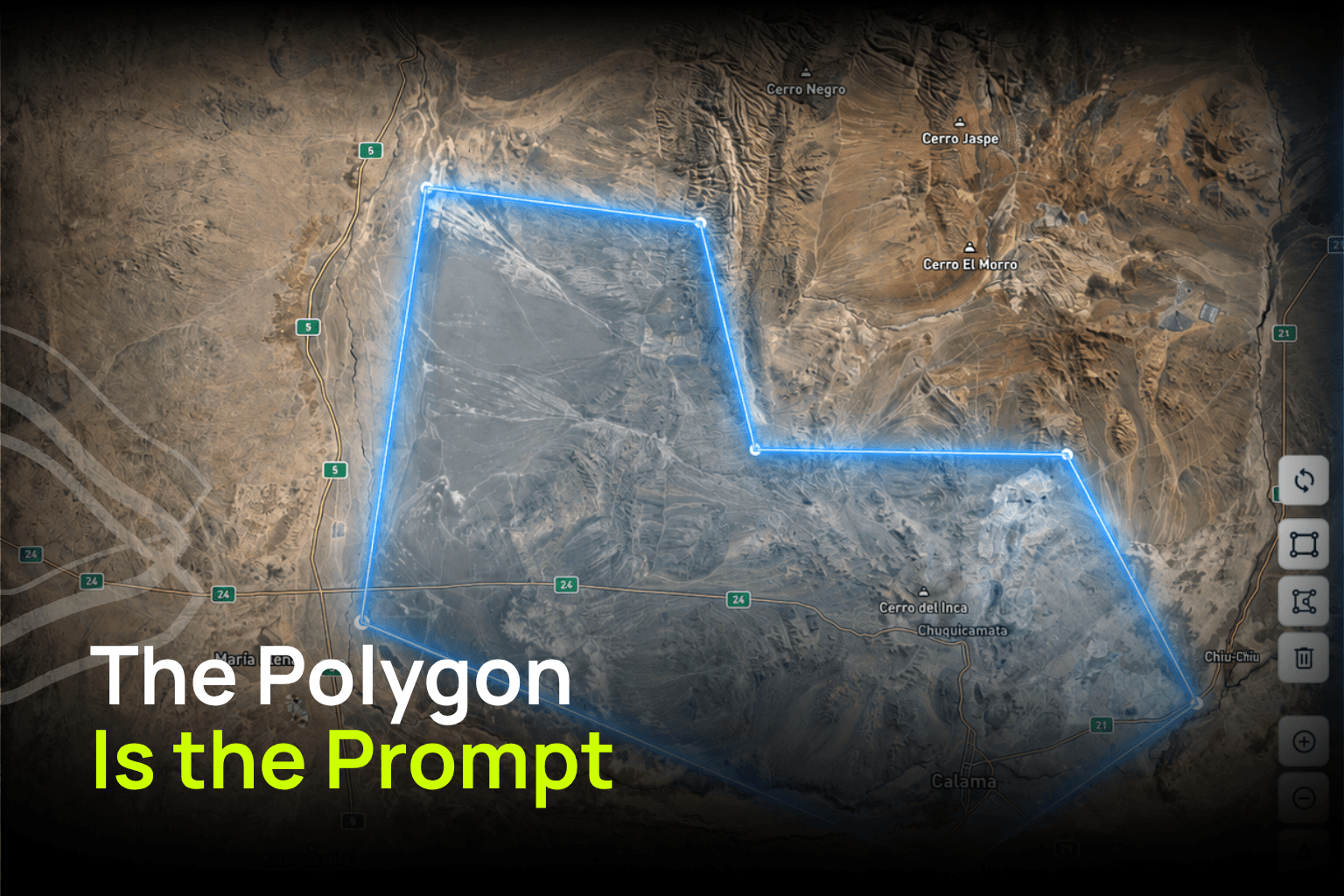
When legacy information is spatialized, its value changes fundamentally. Documents, tables, figures, and analyses gain meaning when they are tied to specific locations. Once placed correctly on a map, information can be layered, filtered, and queried in ways that were previously impossible. Relationships emerge. Redundancies become visible. Gaps are exposed.
Instead of working with fragments, teams gain a unified, map-driven understanding of historical activity.
From Fragmented Files to Location-Aware Intelligence
GeoIntelX focuses on a part of the exploration workflow that traditional systems struggle to address: automating the structuring and spatialization of large volumes of heterogeneous legacy content.
The GIX platform handles the labor-intensive steps of ingesting unstructured documents across many formats, extracting metadata and entities, assigning geospatial references where they were previously missing, and integrating geological, geochemical, geophysical, environmental, and satellite information into a single spatial framework.
Once completed, exploration teams are no longer navigating disconnected archives. They work within a spatially intelligent knowledge system where every asset is discoverable by both content and location.
Value Emerging from Existing Archives
Recent projects have shown how quickly insight can surface once historical information is spatialized. In several cases, decades of dormant exploration material, when placed into a unified geospatial framework, revealed structural relationships and target areas that had previously gone unnoticed.
What changed was not the data itself, but the ability to see it in context. Without conducting new field programs at the outset, teams were able to reassess historical work, prioritize areas of interest, and reframe exploration strategies with greater confidence.
This illustrates the power of transforming archives into spatial intelligence. Insight becomes faster, clearer, and far more actionable.
Implications Beyond Mining
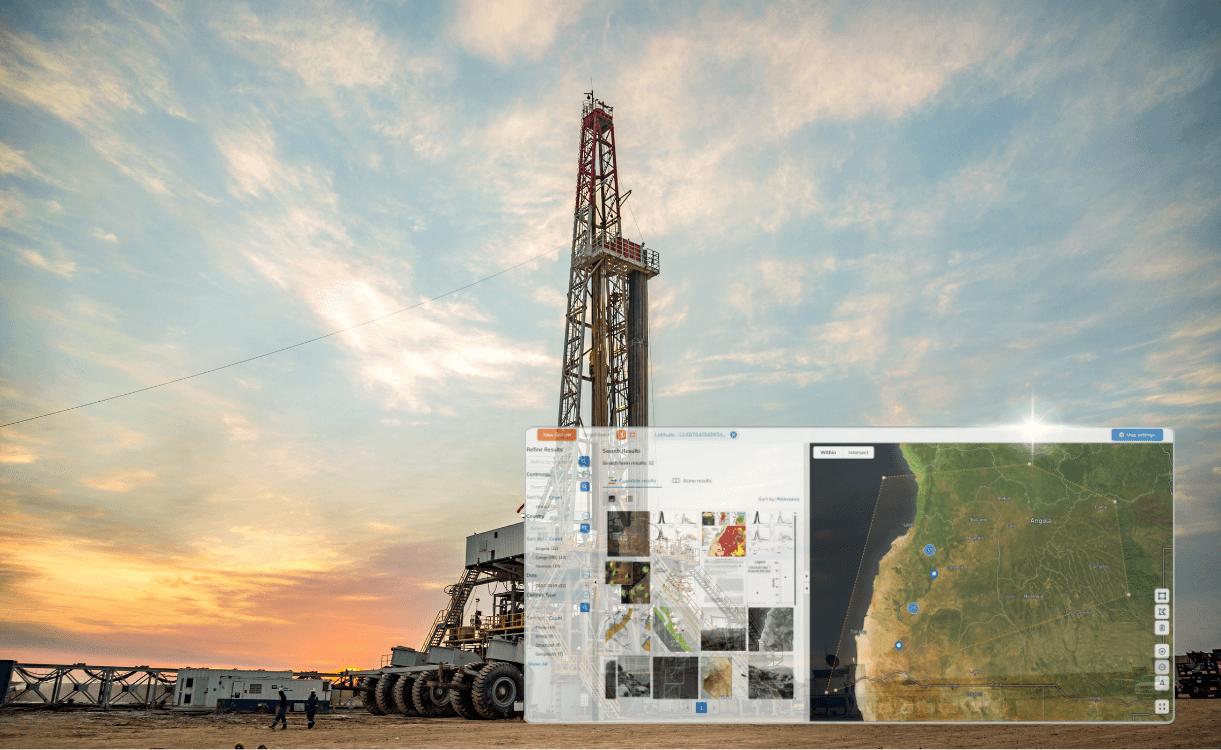
The same principles apply across the upstream oil and gas sectors. Exploration and subsurface teams face similar challenges with legacy information distributed across decades, formats, and systems. When historical datasets are spatially structured, acreage screening accelerates, overlooked relationships emerge, and capital can be directed with greater confidence.
In both mining and energy, the competitive advantage increasingly belongs to organizations that can reuse and reinterpret what they already know.
From Data Possession to Data Advantage
The modern exploration challenge is no longer about collecting more surveys or drilling more wells. It is about unlocking the value of existing information.
Organizations that succeed will be those that can create clean, standardized datasets, spatially intelligent layers, discoverable archives, and a unified understanding of their historical activity.
This is where GeoIntelX delivers its strongest impact. By converting static documents into a geographically anchored knowledge system, GIX enhances interpretation, reduces wasted effort, and strengthens exploration decision-making.
Amplifying Human Expertise
Exploration will always depend on human intelligence. Experience, intuition, and analytical judgment remain irreplaceable. Spatial intelligence does not remove the human from the process. It removes the friction.
By automating the reconstruction and contextualization of legacy data, GIX allows geologists and engineers to focus on higher-value work: interpreting patterns, testing hypotheses, and identifying opportunities.
The future of exploration is not about collecting more information. It is about finally seeing what is already there.